Rumors circulated this week that President Maduro was set to announce reforms that would address the country’s growing economic problems. Financial experts familiar with Venezuela’s economic crisis thought it possible that President
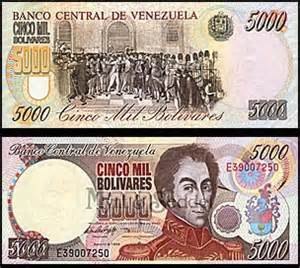
Venezuelan Currency
Maduro might loosen the exchange controls or devalue (again) the Bolivar. The stark economic reality demanded that the government finally act to address economic problems. In the last 12 months on the black market, the Bolivar has lost 81% of its value. 1000 Bolivars is now worth less than 10 cents. And to make matters worse, the country is facing sovereign debt payments that are coming due. Venezuela doesn’t have the money to make the payments.
In light of all of the bad economic news, Venezuelan officials were happy to feed the rumor of impending reforms. Jesus Farias, Venezuelan Minister of Foreign Trade and Investment Affairs, during a Feb 3, 2016, interview, said that an overhaul of currency controls could be forthcoming in days. Yet, as of the close of business on Friday, President Maduro had not appeared on national TV, as is his penchant for theatrics, to announce impending economic reforms.His announcement of January 22, 2016, that he was establishing another currency market cannot be considered a reform of any kind. The new market will not bolster investor or consumer confidence in the least bit.
This week, the only news of importance coming out of Venezuela was that the Supreme Court had again ruled in favor of the executive branch. On January 22, 2016, the National Assembly which is now controlled by the opposition refused to approve President Maduro’s legislation that would have given him more emergency powers. Apparently, he challenged the body’s decision by filing a petition with the Supreme Court. The Justices that are all appointees of either Hugo Chavez or President Maduro ruled in favor of executive branch. The court went so far as to say that President Maduro did not need the authorization of the National Assembly to declare a state of emergency. The Justices handed President Maduro a 60-day period within which he could govern by decree to address the country’s deepening economic crisis.
Members of the newly empowered opposition characterized the Court’s decision as a political coup. Since Hugo Chavez turned the country towards socialism, the Court has never ruled against the executive. I have no doubt that the Venezuelan Supreme Court serves “at the pleasure” of the executive branch and renders decisions in accordance with its political agenda.
The worsening of Venezuela’s economic crisis is a perfect storm brewing. Exchange controls have driven foreign business out of the country. Hyperinflation and price controls have forced numerous local businesses to close their doors. Some local businesses have been temporarily taken over by the government because of the reluctance on the part of their owners to give up their meager profits in the name of socialism. Consumer goods are in such scarce supply that the average Venezuelan cannot count on having toilet paper as a regular item. Black markets in currency and just about everything else have emerged as “facts of life.” Unemployment is running at unstainable levels. Because of hyperinflation, consumers have less and less purchasing power which is aggravated by an ever weaker Bolivar.
The average person on the streets of Caracas knows that he is worse off since the socialist revolution began. Venezuelans who voted the opposition into power in the National Assembly are ready to write-off the government’s socialist agenda.
So why is the government not acting to address the economic crisis? President Maduro is probably waiting (hoping for) the price of oil to rise. However, in order for Venezuela to “break even,” the price of oil would have to rise to about $111 a barrel. Even if the price of oil does rise to that level, I do not believe that it would come soon enough to resolve any the country’s fiscal problems.
Importantly, I expressed the view in a previous post entitled “Venezuela’s Latest Currency Devaluation” that Venezuela’s mounting fiscal problems that caused the (then) devaluation of Bolivar were attributed to deficit spending and fiscal mismanagement. When my post was published on April 4, 2013, the average price of a barrel of crude was about $90. Consequently, the country’s financial woes were not being caused by a drop off in oil revenues. The problem as I saw it was that the Hugo Chavez had mismanaged the oil revenues the country were receiving.
Prince Alaweed Bin Talal of Saudi Arabia is the chairman of Kingdom Holding Company. The billionaire stated in a recent telephone interview with Bloomberg News that:
“I think the era of (US)$100 plus ( barrel of oil) really was an aberration and I think we’ll never see it again”
He went on to state in the interview that the thawing relationships between Iran and the United States would not lead to higher oil prices. It was his belief that Iran will once again start selling oil which will increase the over production (supply) of crude. It does not seem like President
According to Matt O’Brien of the Washington Post’s Wonkblog Venezuela is on the brink of collapse. The only question is whether the Venezuelan government or economy will collapse first. I believe that Venezuela uses the currency and exchange control laws to legitimize the sealing of billions from foreign corporations. When all is said and done, President Maduro’s illegal use of these funds will not the prevent the complete meltdown of the economy. This year as the economy comes to a grinding halt social unrest and protests will become rampant. I do not believe that President Maduro will voluntarily leave office or allow himself to be legally removed from office. It is not inconceivable that he will declare martial law and call out the military to patrol the streets. It is not hard to imagine Venezuela becoming a the modern Cuba.
 paulhunterjones
Those companies are really in a hard spot. One one hand I think they should simply say f**k Venezuela and just stop doing business there. Can there really be any benefit for the company? But with the economy in Venezuela being what it is I can’t imagine what would happen to the people without it. Although, its hard to see why a traded company would or could care?
Your analysis is excellent. The comment is right on point. The companies are in a difficult position when it comes to doing business President Maduro’s Venezuela. The companies are not making decisions based on the possible social ramifications for the Venezuelan people. I agree with you that the shareholders of these companies are more concerned about their investments than the availability of toilet paper for Venezuelans. It is possible that many companies believe that President Maduro and his socialist revolution are going to collapse in the near future. Consequently, these companies might not want to abandoned their operations only to have to pay the costs of “starting up from scratch again” in the near future. Also, the companies that have scaled back operations are now in a position to demand some consideration from any new Venezuelan government that will probably want the businesses to return to the country. Let’s see what happens over the next few months.