Updated December 30, 2015-4:00 pm
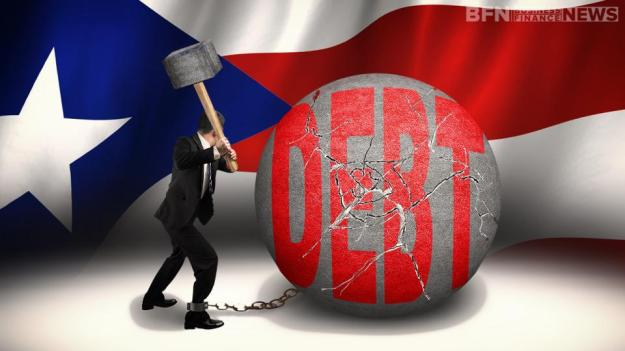
Gov. Garcia Padilla just informed the press that Puerto Rico would default on a 37.3 million debt payment due January 4, 2016. Not surprising anyone, Gov. Padilla went on to say that Puerto Rico would not make any further payments to the fund devoted for future payments. In his USA Today post, Nathan Bomey reports on this development and specifically quotes part of an email of Matt Fabian of Municipal Analytics:
“The governor appears not to know, week to week, how much cash flow the commonwealth will have and which debts will and won’t be paid…Puerto Rico does not have any kind of plan for fixing the mess it has gotten itself into. That, after complaining to Congress about imminent defaults, the commonwealth could find the money to pay almost a billion dollars in debt service while also paying Christmas bonuses will not advance Puerto Rico’s demands for bankruptcy protection.”
On November 30 the Governor issued an executive to “clawback” funds pledged to the payment of specific bonds. These “clawback” funds will be used by Puerto Rico to pay part of the debt coming due on January 4, 2015. Not only was the executive order unconstitutional, it exacerbated the debt problem.
—————————————————————————————————–
Christmas arrived early for President Barack Obama. The U.S. Congress passed the Omnibus Spending Bill of 2016. The 1.8 trillion dollars spending bill averts a shutdown and funds the government for the next year. Most observers credit newly elected House Speaker, Paul Ryan, with convincing restive Republican colleagues to go along with the legislation. The bill met smooth sailing in the Senate. In a surprising procedural move, Senators relaxed certain rules which permitted them to quickly consider and adopt the legislation. Both houses passed the legislation by wide bipartisan margins. President Obama, upon the signing the bill into law, praised Congress for coming together and passing an important piece of legislation.
Both Democrats and Republicans claimed a political victory in the passage of the spending bill. Republicans finally lifted the ban on oil experts that the oil industry desperately wanted. Democrats received funding for refugees and other programs dear to them. The bill has something for every legislators’ Christmas Stocking. Yet, some House and Senate democrats were upset that the legislation failed to offer financial help to Puerto Rico. The Caribbean island is unable to pay its sovereign debt and is in dire need of an injection of cash. The Hispanic and Black Congressional Caucasus threatened to derail passage of the legislation if it did contain some relief for Puerto Rico.
New York State’s representatives cheered the bill’s extension of the Zadroga law for 9/11 responders. At the same time, they are unhappy that the legislation’s failed to address Puerto Rico’s debt problems. Many of the state’s politicians (D) are supported by large Puerto Rican constituencies. Almost all of New York City’s elected politicians lobbied Congress to come to Puerto Rico’s aid. Unfortunately, advocates for Puerto Rican debt relief failed to make out their case on an intellectual level.
None-the-less House Democratic Leader, Nancy Pelosi, on December 18, introduced H.R. 4290, the Puerto Rico Emergency Financial Stability Act. The bill, if signed into law, would stay legal actions filed by Puerto Rico’s creditors who have not been paid on their debt holdings. The proposed stay would remain in effect until March 31, 2016. Rep. Pelosi believed that by that time Congress would have passed comprehensive legislation dealing the Puerto Rico’s debt crisis. By submitting the bill, Rep. Pelosi indirectly acknowledged that Puerto Rico was likely to default on making the Jan.1 2016 debt payment. Regardless of Puerto Rico’s imminent default, House members reacted with little enthusiasm towards the Pelosi bill. I believe that she knew this but had introduced the bill to further her own ambitions. Soon after introducing her bill, Rep. Pelosi was in Puerto Rico receiving political donations from local Democrats.
On November 6, 2012, Puerto Rico’s residents elected Alejandro Garcia-Padilla as governor of the island. Consequently, he has served in that capacity as the Island’s public debt grew into a crisis. In the first days of August 2015, the Governor began publicly acknowledging that Puerto Rico could not and would not pay its outstanding sovereign debt of more than 70 billion dollars. Gov. Garcia-Padilla made it clear that Puerto Rico’s only course of action was to default. What he avoiding saying was that Puerto Rico’s economy was in dire straits for years. While its economy was shrinking, Puerto Rico continued to borrow billions for ill-advised projects and ventures. Most recently, government officials borrowed billions just to meet expenses.
In fairness to the Governor, there has always been a nationalistic segment of the local electorate that believed the government should use public debt financing to support a socialist agenda. Though the crisis in Puerto Rico is real and its ramifications could have serious consequences for the average resident of the island, I do not believe that Puerto Rico deserves to be bailed out with U.S. taxpayers’ money.
What has not been sufficiently reported by the press is Congress’ efforts to address the Island’s financial problems. Under pressure from the Obama Administration, Governor Gracia Padilla and Puerto Rico’s non-voting representative in the U.S. House of Representatives, Garcia Padilla, both legislative bodies proposed differing bills to deal with the crisis. For many legitimate reasons, the Democrats’ proposals for sweeping help failed to gain meaningful support from either party. The lawmakers wrestled with the benefits and drawbacks of two forms of assistance, a financial bailout package and granting the Island the right to declare bankruptcy.
The House considered a bill that would have allowed the Island to declare bankruptcy without imposing an oversight authority to put Puerto Rico’s finances in order. The Senate bill contained no provision for granting Puerto Rico bankruptcy protection. However, the bill did offer 3 billion in immediate bailout funds and required the establishment an oversight authority. Had both bills been passed by their respective bodies, a Senate-House Conference Committee would have met to resolve the bills’ differences. U.S. law makers seem to agree that Puerto Rico’s financial crisis had been brought about by risky financial policies, an unwillingness to enact correcting austerity measures and a failure to respond appropriately to the shrinking economy.
 paulhunterjones