The recent snowstorm forced New Yorkers (city dwellers) to abandon their weekend routines. The weather made traveling by mass transit or private vehicle out of the question. Though the local stores were generally open for business, it was not easy walking through the snow to pick up necessary items. We were stuck in our homes for the duration of the storm. Making matters worse, the local free  television stations interrupted their scheduled programs to report continually on the progress, or lack thereof, of the storm. The entire day was made more boring by the never-ending parade of politicians appearing on television and radio adding their take on the storm. The weather was bad enough but the politicians grandstanding all-day-long was worse.
As a change of pace from the imposed limitations of the falling snow, many of my friends turned to texting me about every mundane subject. I had to pay attention to a flood of text messages and use my phone constantly, something I would have preferred not doing. Why can’t we just make a phone call and personally discuss whatever is on our minds? I am the first person to champion today’s technological advancements. Yet, I often prefer a good old fashion telephone conversation over a time-consuming character limiting conversation carried on by texting.
Having expressed my displeasure with the social vogue of texting, I did engage in an interesting text conversation at the height of the storm. A friend of mine texted me that he was engaged in the ritual of shoveling storm. I responded by saying that shoveling snow was no longer a routine for me. We spent the next hour 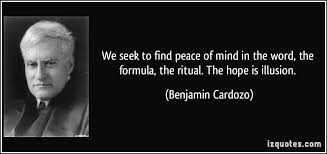 texting our opinions about the differences between a routine and a ritual. I finally ended the texting session when it became obvious that we characterized differently shoveling snow.
Is there a difference between a ritual and routine? I believe so.
The Merriam-Webster dictionary defines a routine as follows: “of a commonplace or repetitious character…of, relating to, or being in accordance with established procedure.” Most of us are familiar with this definition and use the word according. On the other hand, the same dictionary defines ritual as follows: “of or relating to rites or a ritual…according to religious law…done in accordance with social custom or normal protocol.”
We should not assume that the great majority of people use these words with sufficient care. Clearly, rituals are routines and rituals can be routines.
There is little dispute that shoveling snow a few times during winter meets the criteria for being a routine. Preparing oneself for work every day is a routine. Communicating with friends and families once or twice a week is a routine. The annual medical checkup is a very important routine. Regardless of how tired we are at the end of a workday; we take part in the routine of preparing dinner. Properly characterizing an activity as a routine is relatively simple.
At major sporting events in the USA, the crowd participates in the ritual of singing the national anthem before the game begins. The ancient Mayas observed the ritual of sacrificing humans to ensure that the cycle of death and rebirth would take place. Each year in Spain, hundreds participate in the ritual of the running of the bulls. Thanksgiving is a ritual for giving thanks for what we are blessed with. All rituals are, to some degree, routines. However, rituals have an added element of ceremonial practice. The act of doing the routine has an intrinsic value separate and distinct from accomplishing the designed result of the routine.
While texting my friend about the differences between the two terms, I realized that he was not concerned about being precise in the thoughts that he was trying to communicate. He used words that really did not match the reality (circumstances) that they were purportedly referring to.
My friend is originally from a country where snow is a rarity except on the tops of the country’s highest peaks. I assume that his first few snowy winters produced a rush of emotions that caused him to elevate the routine of shoveling snow to the level of a ritual. Yet, for more than 15 years, he has lived in parts of the USA that regularly received higher cumulative snowfalls than New York City did. By now, he should be an expert in “weathering the winter” and tired of the routine of shoveling snow. Aren’t we all? Yet, he continued to insist that there was no quantitative difference between the two words. There was no point of further debate on the subject. Besides, I understood exactly what he was telling me and the emotional feelings he wanted to convey.
Unfortunately, today’s educational systems fail to teach proper grammar. Many younger students rely on the “the shorthand English” that is used in texting. Using a dictionary has become so passé. Instead of using a more precise English, many people say what they think they mean without considering what they should be saying or writing. Effective communication requires some thought ad a great deal of care. Unfortunately, there is an informality in today’s communications that suggest that we are somehow all the members of a particular group; thus, we are supposed to understand what is being said.
Misunderstandings are usually the result when imprecise English is used. Some people are natural born communicators. These people can use English with a precision that makes their thoughts easy to understand. Unfortunately for the rest of us, we must practice our communication skills each day to raise them to the level of respectability. You might want to ditch your online spell and grammar checker for a pencil and writing paper. If you are trying to improve your communication skills its best to do so the old fashion way.
 paulhunterjones